Tires are buried
Mud, loose soil, or soft ground prevents normal traction and continued attempts deepen the vehicle.
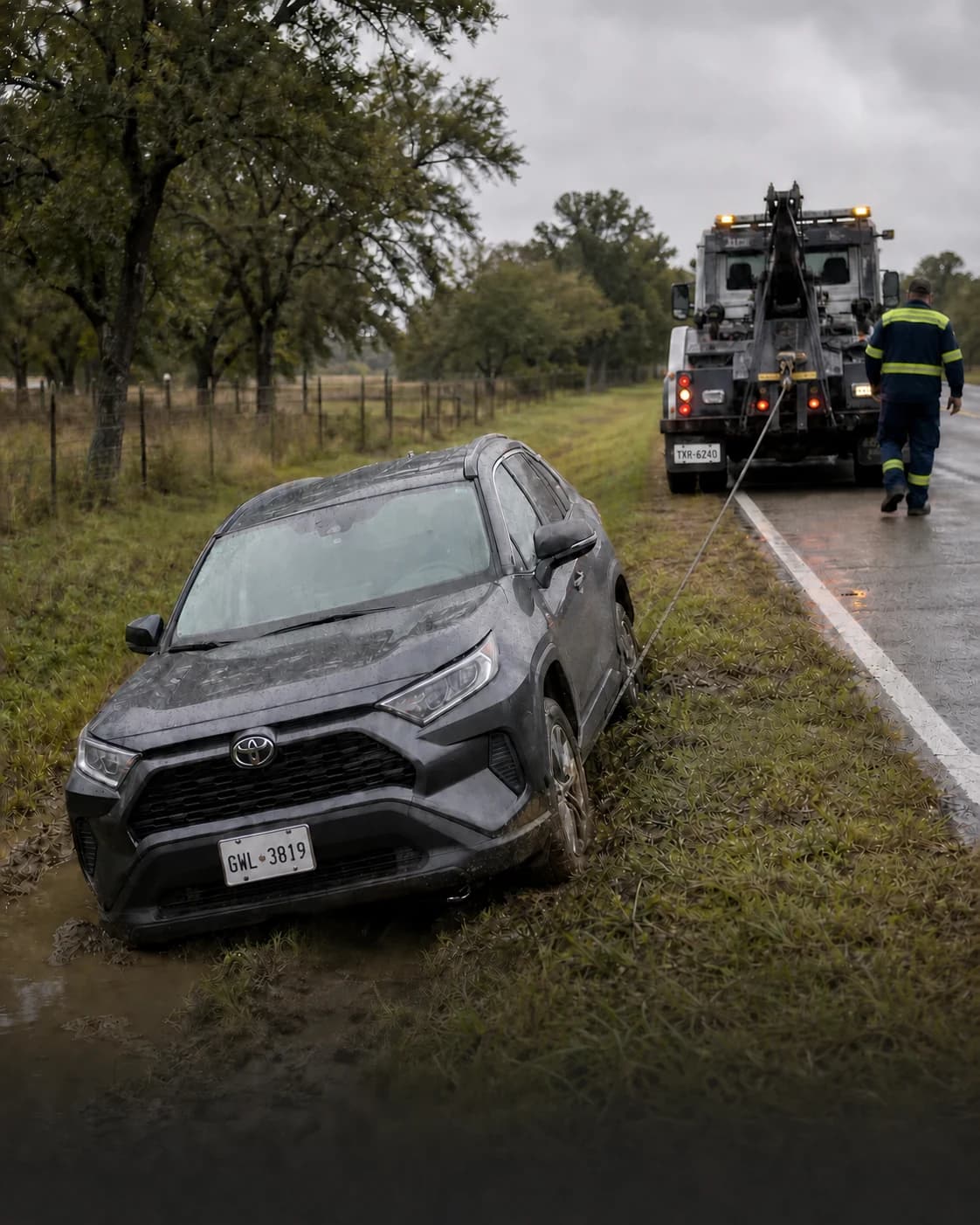
Vehicle recovery in Georgetown is for a car or truck stuck in mud, a ditch, a soft shoulder, or another unstable position. The goal is to return it to stable ground or prepare it for towing without making the situation worse.
Service details
Need help now?
Call with your exact location, vehicle details, and the problem you can see.
(512) 271-4001A winch-out is used to bring a vehicle from mud, a ditch, a soft shoulder, or another unstable position back to a surface where it can move or be loaded. The safest setup depends on vehicle weight, wheel position, slope, ground firmness, distance from stable access, and nearby obstacles.
Stop spinning the tires if the vehicle is digging deeper or sliding. Keep people away from cables, straps, and the travel path. Report leaks, underbody contact, collision damage, water, fencing, trees, and whether the recovery vehicle can approach on firm ground.
Look at the situation
Mud, loose soil, or soft ground prevents normal traction and continued attempts deepen the vehicle.
The vehicle rests on a shoulder edge, drainage area, curb, or uneven surface.
A ditch, slope, or sideways position requires controlled movement before loading.
The vehicle may need both recovery to stable ground and towing afterward.
Before service
Around Georgetown and the listed service areas, calls may come from paved shoulders, unpaved drives, drainage edges, or rain-softened ground. Describe the actual surface and whether a recovery vehicle can reach it without leaving stable access.
Set the brake when appropriate, turn off the vehicle, and avoid repeated throttle that worsens the position.
Share photos from a safe location and describe the surface, slope, obstacles, access route, and property permission.
Check for tire, steering, suspension, and underbody damage before deciding the vehicle can be driven.
Service questions
From a safe position, capture the whole vehicle, each affected wheel, the slope or ditch, nearby obstacles, and the route a recovery vehicle would use to approach.
Stop if the tires are digging in, the vehicle is sliding, the underbody is contacting the ground, or the attempt creates risk to people or property.
Possibly. Tire, steering, suspension, fluid, or underbody damage can make driving unsafe even after the vehicle is back on stable ground.
Related help
Emergency towing in Georgetown is for a vehicle that becomes disabled, collision-damaged, or unsafe to drive. Move people away from danger first, then call with the road, direction, vehicle condition, and destination.
Learn moreLocal towing in Georgetown moves a disabled or non-running vehicle to a repair shop, residence, or other authorized destination nearby. A precise pickup, vehicle-condition check, and receiving plan are still required.
Learn moreDrivers in Georgetown can use this page to compare roadside assistance, towing, and vehicle recovery. Start with where the vehicle is, what went wrong, and where it needs to go.
Learn moreRequest service
Call for a vehicle stopped now. Use this form for planned transport or another request that does not need an immediate response.
Start with the vehicle's location