The vehicle will not move
The engine, transmission, steering, brakes, or electrical system prevents a safe departure.
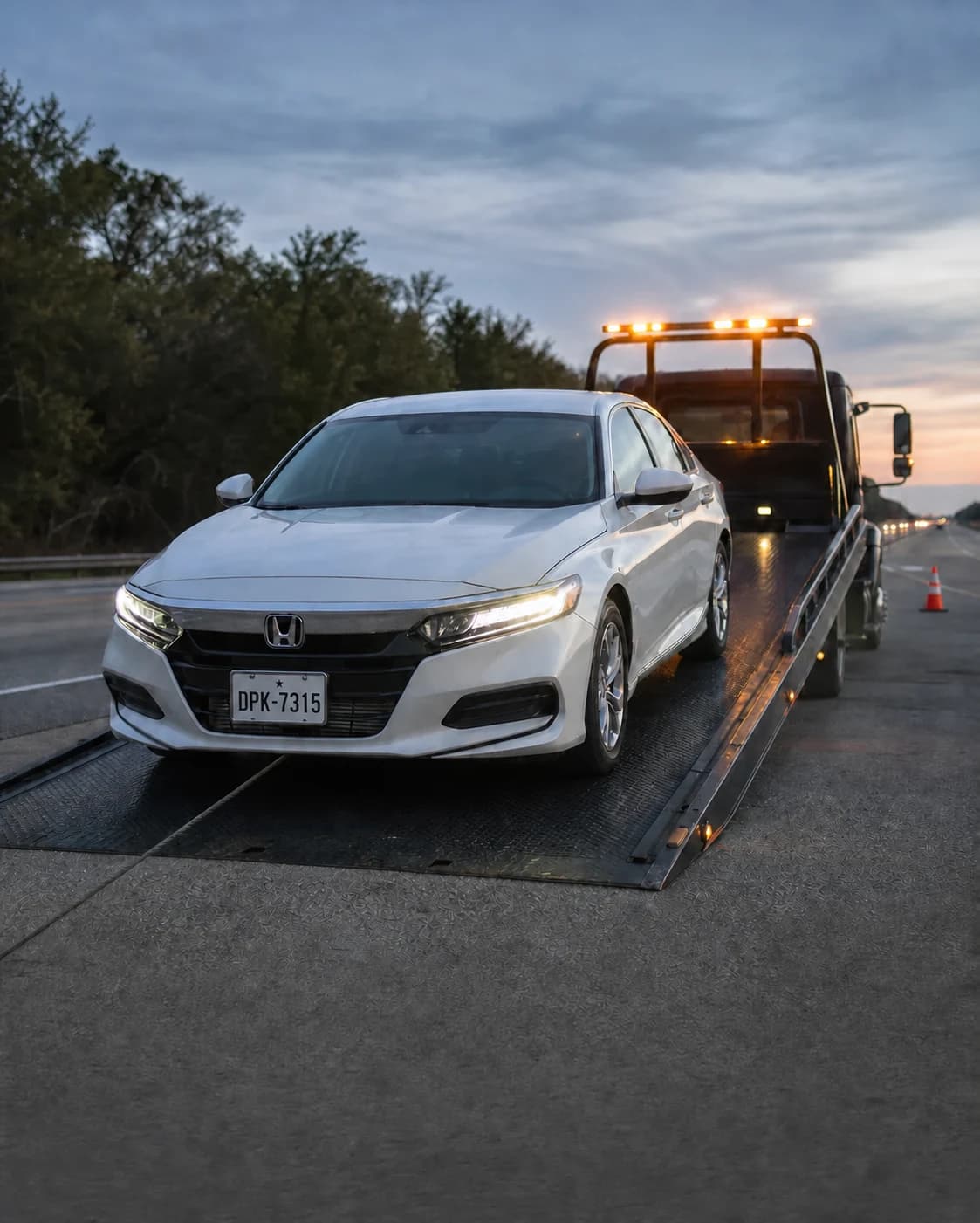
Emergency towing in Georgetown is for a vehicle that becomes disabled, collision-damaged, or unsafe to drive. Move people away from danger first, then call with the road, direction, vehicle condition, and destination.
Service details
Need help now?
Call with your exact location, vehicle details, and the problem you can see.
(512) 271-4001Emergency towing is appropriate when the vehicle stops without warning, has collision damage, loses steering or braking control, overheats severely, leaks fluid, or cannot remain where it is. Turn on the hazard lights if possible and put distance between yourself and moving traffic before focusing on the vehicle.
Call 911 first for injuries, fire, a fuel leak, blocked travel lanes, or an immediate threat to people. For the tow call, report the roadway, direction of travel, nearest exit or cross street, vehicle type, wheel position, visible damage, and any instructions from law enforcement.
Look at the situation
The engine, transmission, steering, brakes, or electrical system prevents a safe departure.
A wheel, suspension part, body panel, glass, or fluid system may be compromised.
The vehicle is exposed to traffic, blocking access, or positioned where remaining nearby creates risk.
The vehicle restarts but stalls, overheats, or produces the same warning again.
Before service
For an emergency on I-35, give the northbound or southbound direction and the closest exit. On State Highway 29 or Williams Drive, a cross street or business entrance can be more useful than a broad map result. Never walk along a traffic lane to search for a marker.
Move away from active lanes when it is safe, and follow emergency-authority instructions at a collision scene.
Mention leaks, smoke, deployed airbags, damaged wheels, locked steering, and the vehicle's exact position.
Confirm that the repair shop, body shop, residence, or storage location can accept the vehicle.
Service questions
Call 911 first for injuries, fire, leaking fuel, blocked lanes, or immediate danger. A disabled vehicle in a stable, safe position may not require emergency authorities.
Share police instructions, visible fluid leaks, deployed airbags, damaged wheels, steering position, and whether debris or other vehicles limit access.
It can go to an authorized destination that is able to receive it. Confirm operating hours, after-hours parking, and key-handling instructions before transport.
Related help
Twenty-four-hour towing in Georgetown covers vehicle trouble overnight, early in the morning, or after a destination closes. Pickup access, parking, and key-drop instructions may need to be confirmed before the vehicle moves.
Learn moreLocal towing in Georgetown moves a disabled or non-running vehicle to a repair shop, residence, or other authorized destination nearby. A precise pickup, vehicle-condition check, and receiving plan are still required.
Learn moreRoadside assistance in Georgetown may resolve a discharged battery, locked-in keys, or a flat tire without a tow. The vehicle's symptoms, equipment, and stopping place determine whether help can be completed safely where it sits.
Learn moreVehicle recovery in Georgetown is for a car or truck stuck in mud, a ditch, a soft shoulder, or another unstable position. The goal is to return it to stable ground or prepare it for towing without making the situation worse.
Learn moreRequest service
Call for a vehicle stopped now. Use this form for planned transport or another request that does not need an immediate response.
Start with the vehicle's location